
Community and Students Collaborate to Address Challenges Furusato Mirai College Holds Final Report Meeting
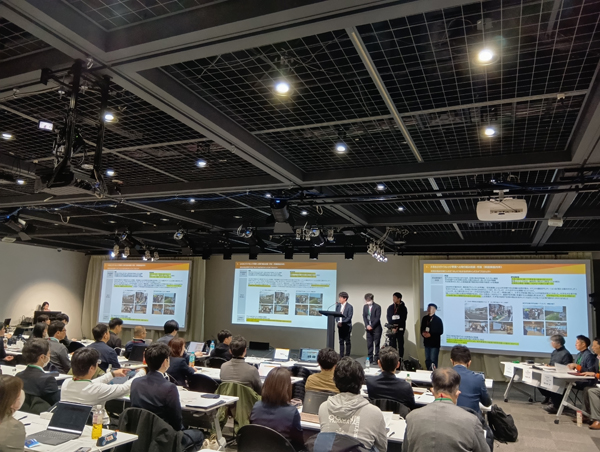
“Furusato Mirai College,” promoted by the Ministry of Internal Affairs and Communications, held its final report meeting in Tokyo on Thursday, the 12th. Fifteen municipalities that implemented the Furusato Mirai College model demonstration project in fiscal year 2025 presented the results of their one-year projects. The Furusato Mirai College is a Ministry of Internal Affairs and Communications project in which municipalities, universities, and other organizations collaborate to address regional issues based on student fieldwork.
Tsukigata Town, Hokkaido, presented on “Tsukigata Taiken (University Students x Entrepreneurship).” Since fiscal year 2023, the town, with the support of local organizations, has been promoting regional revitalization through entrepreneurship in collaboration with Hokkaido University. They are conducting “Tsukibiz Camp,” a workshop aimed at entrepreneurship, targeting university students and working adults in the surrounding area.
The Furusato Mirai College aimed to promote local entrepreneurship by providing a practical platform for entrepreneurship education (creating entrepreneurs) and addressing local challenges in the town.
University students focused on four areas: art, education, agriculture, and welfare, conducting research on local issues and implementing business solutions. They also renovated vacant houses to create a community exchange hub facility with guesthouse functions, serving as accommodation for students and people with connections to the town, and a place for interaction among local residents.
As a result, a system of regular student visits to the town was established, leading to stable revenue for the community exchange hub facility.
In the welfare sector, they demonstrated a project called “Tsui-deni!” which primarily assists elderly people with their needs. Utilizing their existing paid volunteer system, they developed a service system to address issues not covered by the long-term care insurance system, such as “I need someone to change a light bulb,” “I need someone to teach me how to use a smartphone,” “I need someone to talk to,” and “I need help shoveling snow.”
In the agriculture sector, ideas such as agricultural experience tours co-created by students and local farmers were proposed.
To address the structural gap between students wanting to experience agriculture and farmers struggling with labor shortages, a project called “Tsukibiz Camp Mini” was implemented to verify matching methods. This project included proposals for business models incorporating student perspectives, such as building a sustainable human resource matching site involving multiple generations and utilizing non-standard agricultural products.
Noshiro City in Akita Prefecture implemented the “Noshiro Connecting Town Campus 4” project, incorporating the perspectives of young people. Since the city lacks a university, 80% of young people leave the area after graduating from high school. The low population of people in their 20s, coupled with labor shortages in businesses, a lack of successors, and a shortage of community leaders, presents significant challenges.
Therefore, the project aimed to foster a circulation of people and cultivate a network of related populations through collaboration between the government, private sector, universities, shops, community groups, and regional revitalization teams.
The four projects were: “Vacant Store Renovation Program,” “Local Industry Charm Discovery and Improvement Program,” “Town Charm Discovery and Dissemination Program,” and “Public Space Utilization Event Implementation Program.”
The vacant store renovation program created a platform for challenges through the renovation of vacant stores and established a continuous activity base for university students.
The program for discovering and enhancing the appeal of local industries included a “Wood City Tour” exploring Noshiro’s timber industry, learning about local production and consumption through DIT (Do It Together), and promoting its appeal through panel displays. DIT is an initiative that values creating things together.
The program for discovering and promoting the charm of the town involved discovering the charm of the area through walking tours of the shopping district and promoting it through brochures.
The public space utilization event implementation program aimed to create a space for local organizations to participate using vacant real estate as a base, fostering interaction and expanding activities.
In the projects, we made a conscious effort to realize as many student ideas as possible. For the Wood City Tour, students proposed video production, which was not initially planned, and actually produced it. Through interviews with local residents in the shopping district and activities to create a base, students had the opportunity to directly interact with local people, and some students commented that they were able to learn about the thoughts of local people and the background of their work.
For timber businesses, this project provided an opportunity to re-evaluate the value of their own businesses. They consider the new insights gained through their involvement with students to be a major achievement of the project.
Unnan City, Shimane Prefecture, is promoting a talent return project. It identified the following challenges: “a lack of young people involved in the operation of local events,” “lack of research and analysis on the utilization of vacant houses,” and “the realization of an ‘esuko’ Unnan City.”
“Esuko” is a Shimane dialect word meaning “just right.”
First, they created spaces for exchange centered around local festivals and student accommodations. They implemented activities that were easy for local high school students and families to participate in, fostering intergenerational exchange. Emphasis was placed on building relationships between students and local residents, with local residents working alongside the students.
Furthermore, regarding vacant houses in the city, architecture students visualized the potential of the area and proposed regional designs. The project was developed with the premise of long-term collaboration over several years. An example of an architectural project is the student involvement in the preparatory committee for the establishment of an area platform in front of the JR station.
These initiatives have clarified the actors responsible for addressing regional issues. Student involvement has fostered a sense of community autonomy, leading to a positive cycle where local residents serve as role models for students.
Ehime Prefecture’s Uwajima City promoted a project themed on “pre-disaster recovery.”
The city recognizes that a Nankai Trough earthquake could potentially destroy industries and cultural assets. Therefore, they are pursuing pre-disaster recovery with a focus on how to protect these.
Pre-disaster recovery is an effort to minimize damage in the event of a disaster and to facilitate smooth recovery.
University students and local high school students proposed plans to concretize the pre-disaster recovery plan. These plans are being discussed with residents of three regions as the preservation of the pre-disaster recovery plan.
One of the three regions is the Important Traditional Buildings Preservation District (Iwamatsu), where discussions focused on how to utilize cultural properties and other buildings.
Another region is the Mima area, which is not affected by tsunamis even in the event of a Nankai Trough earthquake. Discussions focused on the nature and use of temporary housing in this area, which serves as a rear-area support area.
The third region is the urban area. We discussed creating necessary spaces for people in the shopping district and created diagrams outlining what the ideal shopping district should look like and what spaces are needed.
※Translating Japanese articles into English with AI