
Developing Large-Scale Systems Alone Using AI – An Interview with Makoto Hamamura, President of Parallel Core
Parallel Core is a new AI-specialized company spun off from the digital division of Kuuan. Their Solo SIer service allows a single person to manage an AI team, handling everything from system development to operation. We interviewed President Makoto Hamamura about the company’s vision.
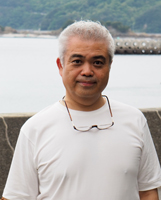
濱村社長(President Hamamura)
–Key Points of Solo SIer
The key point is “letting AI implement, and humans make the decisions.”
By creating a system that can be confidently entrusted to AI, execution is left to AI, allowing humans to focus on customer and business decisions. This creates an environment where business can be expanded without increasing personnel.
The singularity in the SI industry is happening right now.
I was able to launch three large-scale systems supporting regional revitalization in two months using AI. To make this AI development system available in more regions, I separated the AI development function from Kuuan and established Parallel Core in August.
AI has the power to accelerate new businesses. On the other hand, it’s difficult to use. The mechanism of AI is inherently probabilistic, and structurally, even the most advanced AI cannot produce results with 100% accuracy.
Humans demand the same accuracy from business systems, meaning they must follow defined rules and produce the same results every time. The characteristic of AI, where results vary each time, is difficult to accept in business systems.
To apply such AI to commercial systems, a mechanism is needed that leverages the high productivity of AI while guaranteeing 100% deterministic adherence to defined rules. Solo Sler was developed to fulfill this role.
–AI is attracting attention, and widespread adoption is expected, but its use at the operational level is still lagging.
There are several reasons for this.
One is “hallucination,” where AI generates information not based on facts. Therefore, it’s unclear what authority should be granted to AI, making it daunting to use.
Furthermore, it’s unclear who is responsible when a system created with AI breaks down. AI cannot take responsibility, so that responsibility falls to humans, but even humans don’t know what caused the malfunction. This hinders the progress of AI utilization.
Furthermore, while AI will act according to instructions, what happens if those instructions are hacked by a malicious third party and they are instructed to “destroy that part”? We must seriously consider how to overcome such risks.
On the other hand, some argue that humans should perform the final check of programs created by AI. However, the programs are far too massive for humans to check. For example, traditionally, a human would check the programs of five engineers, but with the introduction of AI, the programs of 100 engineers suddenly appear, making it impossible for humans to check them all.
As described above, while AI has excellent capabilities, it’s impossible to entrust everything to it. Therefore, Solo SIer implements an AI control mechanism.
Instructions to the AI are ultimately given by humans, and AI that ignores the rules pre-set by humans is blocked by various control mechanisms.
By ensuring safety and security through an AI control mechanism, significantly improving productivity by coordinating numerous AIs, and ultimately ensuring human responsibility, it becomes possible for even one person to develop large-scale systems. In fact, I developed three large-scale systems in two months.
–Engineering in the AI Era
While AI streamlines programming, what I emphasize is not that, but the contribution of veteran engineers who possess tacit knowledge and a deep understanding of system development.
Even in the AI era, decision-making must ultimately be done by humans. Therefore, humans need the ability to judge “this specification is good” and “this structure is common.” Veteran engineers possess this ability more than younger engineers. Therefore, I believe that experienced veteran engineers will play a crucial role in the AI era.
Veterans, with their diverse experience ranging from customer understanding and requirements definition to project management and troubleshooting, can judge whether “this is high-risk but unavoidable” or “this absolutely must not be done.”
Young engineers lack this discernment due to their limited experience. Their limited system development experience makes them more likely to blindly accept AI suggestions.
Veterans have accumulated a wide range of experience, including failures, and understand where mistakes tend to go wrong, allowing them to give AI precise instructions. Because humans give instructions and make decisions, they can also take responsibility.
In the age of AI, individuals who understand system development comprehensively and possess tacit knowledge will be highly valued.
– What should young people do?
If young people can do it, AI can also do it. Therefore, young people should find opportunities in developing services and new businesses that leverage their unique sensibilities and knowledge that veterans lack. I recommend starting a business within the company rather than quitting and starting one. Companies should also support intrapreneurship to aim for both increased engagement among young people and business growth. Solo SIer is a tool that supports these efforts.
— President Hamamura also manages Kuuan, which aims for regional revitalization. The relationship between Kuuan and Parallel Core
We aim for regional revitalization that respects the individuality of each region while utilizing digital technology. Kuuan will be in charge of regional revitalization, while Parallel Core will handle digital aspects. By combining the strengths of both companies, they will revitalize the region through digital means. The plan is to promote regional revitalization by combining Parallel Core’s AI technology with Kuuan’s regional business know-how to create highly profitable regional businesses.
※Translating Japanese articles into English with AI