
SoftBank and Ericsson Japan Automatically Optimize Base Station Coverage
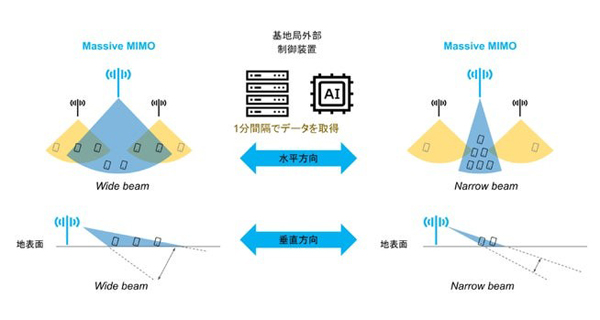
Following the successful demonstration at the Osaka-Kansai Expo, SoftBank and Ericsson Japan have deployed a system at several large-scale event venues across Japan, including large arenas and dome-shaped facilities in the Tokyo metropolitan area, that uses AI-based external control to automatically optimize the coverage patterns of Massive MIMO-compatible base stations in response to changes in traffic.
This system uses AI to automatically determine event occurrences based on user distribution data obtained from base stations every minute by an external control device (server). It dynamically and automatically optimizes the horizontal and vertical coverage patterns of Massive MIMO base stations.
During the Expo demonstration, the system was applied to base stations installed in outdoor areas, and improvements in communication quality were confirmed, including an approximately 24% improvement in downlink throughput (from 76.9 Mbps to 95.5 Mbps) during sudden traffic fluctuations.
At large-scale event facilities and theme parks, user traffic distribution fluctuates significantly between normal times and when an event occurs. In particular, with events such as fireworks displays that are canceled or have their start times changed due to weather, or when admission to specific areas is restricted, conventional methods of specifying time periods and changing coverage patterns in advance are often unable to respond appropriately. To address these issues, the two companies have been conducting extensive testing of automatic traffic optimization using AI-based external control of base stations.
※Translating Japanese articles into English with AI